Collection: Saddle Pads
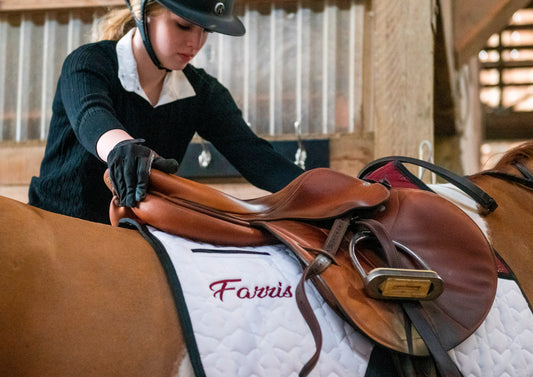
The Farris saddle pad started from a small, specific annoyance: there is nowhere safe to put a phone when you ride. The zippered pocket built into this pad holds a smartphone and small essentials securely through schooling, hacking and everything in between — no armband, no bulging pocket, no phone left behind in the tack room.
Underneath, an anti-slip silicone grip keeps the saddle where you put it. Improved stability is the point, and the grip is designed not to damage the saddle when used as intended. Integrated girth protection reduces rubbing at the pressure points where wear usually shows up first, and breathable materials throughout help manage heat over longer sessions.
The finish is deliberately clean and conventional, so it suits the competition ring as readily as a Tuesday-evening lesson — you are not choosing between a practical pad and a presentable one.
Care is straightforward: machine wash cold with similar colours, then air dry. No special treatment, no hand washing.
Rated 4.8 out of 5 across 25 verified reviews. Ships from Canada and the US with 30-day risk-free returns.
-
Farris Equestrian - Most innovative english Saddle Pad
ADD TO CARTRegular price $145.00 CADRegular priceSale price $145.00 CAD -
ShopFarris eGift Card
ADD TO CARTRegular price From $25.00 CADRegular priceSale price From $25.00 CAD
How to Choose Horse Riding Gloves
Five things decide whether a riding glove works: grip, fit, breathability, dexterity, and durability. Grip comes first reins communicate through your hands, and a glove that slips when your palms sweat or the rain starts breaks that connection. Look for reinforced material at the thumb, index, middle and ring fingers, because those four points carry the rein. Fit should be snug like a second skin with no spare fabric at the fingertips; loose gloves bunch, twist and blister. Breathable mesh keeps hands dry in summer, and a low-bulk build preserves the "feel" that lets you make small rein adjustments without looking down.
| Type | Best for | Key feature | Watch out for |
|---|---|---|---|
| Mesh hybrid | Everyday schooling, trail, barn | All-weather grip + airflow | Check palm reinforcement quality |
| Summer mesh | Hot weather | Maximum ventilation | Thin palms wear fast |
| Winter insulated | Cold-climate riding | Warmth without bulk | Bulk kills rein feel |
| Leather show | Formal competition | Traditional look | Slips when wet; needs break-in |
FAQ's
How should riding gloves fit?
Snug everywhere, tight nowhere. Measure around the widest part of your hand (excluding the thumb) and match it to the size chart. Your fingertips should reach the end of the glove without pressure, and the palm material should sit flat with no wrinkles wrinkled fabric between your hand and the rein is what causes rubbing and blisters. If you are between sizes, size up: an adjustable wrist closure takes up the slack. Farris offers a free size exchange, so an imperfect first guess costs you nothing.
Leather vs synthetic vs mesh: which is best?
Leather looks traditional and suits the show ring, but it needs a break-in period, loses grip when wet, and runs hot in summer. Full synthetic gloves are cheap and durable but often bulky, reducing rein feel. Mesh-backed hybrids like the Farris Flexigrip pair a reinforced synthetic palm for all-weather grip with a 4-way stretch mesh back for airflow, giving leather-level control without the break-in or the sweat. For everyday schooling, trail riding and barn work, a mesh hybrid is the practical choice; keep a leather pair for formal competition if your discipline requires it.Full comparison →
Gloves by discipline: dressage, jumping, trail and barn work
Dressage riders prioritise feel thin, close-fitting gloves that transmit subtle rein aids. Jumpers need grip and security over fences, especially with a horse that pulls. Trail and endurance riders want breathability, sun protection and touchscreen fingertips for navigation. Around the barn, the same gloves protect against rope burn when lunging and leading. A reinforced-palm mesh glove covers all four jobs, which is why one well-made pair outworks a drawer full of specialised ones.
How to wash and care for riding gloves
Hand wash in cold water with mild soap, press out the excess water (don't wring), and air dry away from radiators and direct sun. Heat degrades grip materials and elastic. Brush off arena dust after each ride and let gloves dry fully before storing damp gloves wear out fastest. With basic care a quality pair lasts seasons, not months.Step-by-step care guide →
5-point buying checklist
1. Reinforced palm at the four rein contact points. 2. Snug fit with zero spare fingertip fabric check the size chart, size up between sizes. 3. Breathable back (mesh or ventilated) if you ride in warm weather. 4. Touchscreen-compatible fingertips so your phone stays usable. 5. A returns policy that lets you exchange sizes free buying gloves online should be risk-free.
Related Categories
-
Fast Shipping
Products ship within hours
-

Satisfaction Guaranteed
Hassle-free returns and exchanges
-

Secure Transactions
Transactions are handled with bank-grade security.
-
Easy Returns
30-Day Risk-Free Return